
11 Plus Stress Management: How to Keep Your Child Calm During Preparation
Help your child manage 11 plus stress and anxiety 2026. Practical strategies for exam preparation without anxiety. Expert advice on keeping kids calm, motivated and confident.
The Stress That Nobody Talks About
The 11 plus exam creates a peculiar kind of pressure that builds silently over months. A child begins preparation in a state of calm curiosity. Gradually, as deadlines approach and practice papers are marked and discussed, the emotional temperature rises. By the time three months remain, a child who was enthusiastic about learning has sometimes transformed into an anxious student who dreads practice sessions.
Many parents notice this shift too late. By the time they recognize that their child's stress has become counterproductive, significant damage has already been done to the child's confidence and the family's wellbeing. The most important thing to understand is this: moderate stress can be motivating. Excessive stress is counterproductive. A child who feels appropriately challenged performs better than a child who feels overwhelmed, regardless of their actual knowledge level.
This guide gives you the strategies to keep your child in the productive stress zone throughout 11 plus preparation — challenged enough to stay focused, but calm enough to learn and retain information effectively.
Recognize the Signs of Excessive Stress Early
Before you can manage 11 plus stress, you need to recognize when it has crossed from normal exam nerves into problematic anxiety. Watch for these warning signs: physical symptoms including headaches, stomach pain, or sleep disruption that coincide with practice sessions; emotional signs such as repeated expressions of fear ("I'm going to fail," "I'm not smart enough"), tears during or after study time, or irritability unrelated to frustration with specific problems; behavioral changes including school refusal, refusal to attempt practice work, or avoidance of any mention of the exam; or social withdrawal where your child stops engaging in normal activities or friendships because they are consumed by exam worry.
One or two of these signs does not indicate crisis. Consistent patterns suggest that your child's stress level has become unhealthy and requires intervention. The good news is that this intervention does not mean stopping preparation — it means changing the approach to preparation.
Separate the Exam From Your Child's Worth
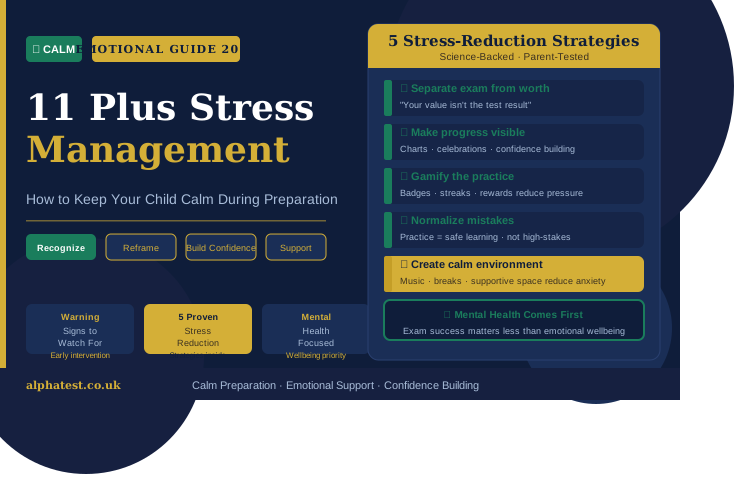
The single most powerful thing you can communicate to your child is this: the exam is important, and your worth is not determined by the result. Children absorb the emotional weight their parents place on the exam. If a parent communicates — through tone, attention, or conversations with others — that this exam is the defining moment of their child's childhood, the child internalizes that belief and develops proportional anxiety.
The alternative framing is genuinely different: "This is an opportunity you've prepared seriously for. You've worked hard, you understand the material, and you're ready. The exam will show what you've learned. Whatever the result, I'm proud of you for trying hard, and your future is not determined by this test." This framing maintains exam seriousness while removing existential stakes.
Convey this message not just once but consistently throughout preparation, particularly when stress appears. When your child expresses anxiety ("What if I fail?"), resist the temptation to offer false reassurance ("You won't fail, you're so smart"). Instead, acknowledge the feeling and reframe it: "It's normal to feel nervous about a big test. Whatever happens, I love you and I'm proud of how hard you've worked. Let's focus on doing your best."
Build Confidence Through Visible Progress
Stress diminishes when confidence increases. A child who can see measurable improvement week by week feels genuinely confident. A child who cannot see progress begins to doubt their capability and stress increases.
Make progress visible. Use AlphaTest's progress dashboard to show your child their accuracy improving, their speed increasing, their weak topics strengthening. Print out charts showing improvement in practice paper scores. Celebrate milestone achievements — "You've now done 20 practice papers," "You got 100% on today's fractions practice." These celebrations are not false motivation; they are acknowledgment of genuine effort and improvement.
Create a Stress-Reducing Practice Environment
The environment where your child practices matters more than most parents realize. A silent, isolated study space sometimes increases anxiety rather than reducing it. Some children prepare better with background music, others with a parent nearby (not hovering, just present), others in a library or café. Experiment to find what genuinely calms your child rather than what you assume will work.
Break practice into smaller chunks. Forty-five minutes of continuous practice sometimes feels overwhelming. Three fifteen-minute sessions with breaks in between accomplishes the same learning with less psychological pressure. The breaks are genuine breaks — a walk, a snack, conversation unrelated to the exam — not just switching to a different subject.
Use Gamification to Reduce Pressure
Platforms like AlphaTest build rewards, streaks, and achievement systems that transform exam preparation from stressful grind into engaging activity. When a child is motivated by earning badges, completing streaks, and competing against themselves for better scores, the emotional experience of practice shifts from "this is exhausting preparation I must do" to "this is a challenge I want to achieve."
This is not gimmickry. Gamification works because it provides immediate, frequent positive feedback. A child who gets points for correct answers, who sees their streak grow, who unlocks new levels, receives dozens of small dopamine hits during a practice session. A child doing unmarked worksheet exercises receives none of these hits — just awareness of mistakes.
Normalize Mistakes and Failure in Practice
Many children treat practice papers as high-stakes exams. A mistake on a practice paper is experienced as failure. This transforms practice from a safe learning environment into a stressful performance environment. The entire purpose of practice is to make mistakes and learn from them. A practice paper with no mistakes probably means the child is not being challenged at the right level.
Reframe mistakes explicitly: "Good. You made a mistake on this problem. That's exactly why we're doing practice papers now — so you can find mistakes in a safe environment before the real exam. What did you learn from this mistake?" This turns errors from sources of shame into sources of growth.
When to Pause Preparation
There is a point where continuing preparation does more harm than good. If your child is experiencing severe anxiety, sleep disruption, physical symptoms, or expressing genuine distress about the exam, pause intensive preparation. This does not mean stopping entirely, but it means reducing intensity, taking breaks, and sometimes temporarily stopping structured practice.
Many parents fear that pausing will harm exam performance. The opposite is often true. A child who is severely anxious will perform worse on exam day than a child who has taken a two-week break to recover emotionally. A month of calm, confident preparation produces better results than six weeks of anxious grinding.
The Final Weeks: Transition to Confidence
In the final four weeks, shift the psychological frame. Your child has prepared. They know the material. The remaining weeks are about building confidence and maintaining momentum, not about cramming new learning. One timed paper per week, review of genuinely weak areas, and otherwise normal life activities create the optimal state. A child who feels ready — not just prepared, but genuinely confident and calm — performs significantly better than one who is exhausted and stressed.
The Ultimate Perspective
Your child's 11 plus exam result matters. Their mental health and wellbeing matter more. A child who passes the exam but has developed exam anxiety that affects their secondary school experience has not truly succeeded. A child who does not achieve a grammar school place but has learned to work hard, tolerate challenge, and believe in themselves has succeeded profoundly.
Keep the exam in perspective. It is one test on one day. It is genuinely important, but it is not life-determining. Your child's long-term wellbeing is more important than this single result.
Ready to boost your child's 11+ preparation?
Try AlphaTest free — AI-powered practice, instant feedback, and gamified learning.
Start Free Trial